
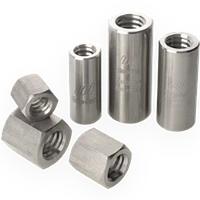
Grade 1.4362 Duplex Stainless Steel Specification
2304 Duplex | X2CrNiN23-4 | UNS S32304
Grade 1.4362 Duplex Stainless Steel, also known as 2304 Duplex or UNS S32304, is a lean duplex stainless steel containing approximately 22-24% chromium, 3.5-5.5% nickel and controlled additions of nitrogen. Its duplex microstructure, comprising austenite and ferrite, provides an excellent combination of corrosion resistance and high mechanical strength. Grade 1.4362 offers significantly higher yield strength than conventional austenitic stainless steels such as 304L and 316L, whilst maintaining good weldability and fabricability.
Applications
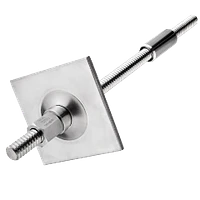
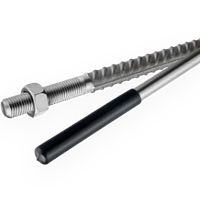
- Stainless steel reinforcement and concrete accessories
- Civil engineering and bridge construction
- Marine and coastal fixings
- Structural support systems
- Chemical processing equipment
- Water and wastewater treatment plants
- Storage tanks and pressure vessels
- Architectural and construction applications
- Transport and infrastructure projects
- Heat exchangers and process pipework
1.4362 Related Specifications and Trade Names
- EURONORM: 1.4362
- EN designation: X2CrNiN23-4
- ASTM/ASME: UNS S32304
- Swedish standard: SS 2327
- Commercial grade: 2304 Duplex
- Alloy 2304
- Duplex 2304
- Lean Duplex Stainless Steel
Corrosion Resistance
- Excellent resistance to atmospheric corrosion and many industrial environments.
- Superior resistance to chloride-induced stress corrosion cracking compared with 304 and 316 grades.
- Higher resistance to pitting and crevice corrosion than 304 stainless steel.
- Suitable for many environments where standard austenitic grades may prove inadequate.
- The duplex structure provides excellent resistance to intergranular corrosion.
Heat Resistance
- Suitable for service temperatures from approximately -50°C to 300°C.
- Good oxidation resistance in elevated-temperature applications.
- Extended exposure above 300°C is not generally recommended due to the potential formation of embrittling phases.
- Retains mechanical strength better than standard austenitic grades at moderate temperatures.
Welding Characteristics
Grade 1.4362 possesses good weldability using conventional stainless-steel welding methods. Key considerations include:
- Maintaining the correct ferrite-austenite balance.
- Using suitable duplex stainless steel filler metals where required.
- Avoiding unnecessary heat input and prolonged exposure at elevated temperatures.
Post-weld heat treatment is generally not required.
Machinability
- Machinability is lower than standard austenitic grades due to the higher strength of the material.
- Rigid machine setups, sharp tooling and adequate lubrication are recommended.
- Reduced cutting speeds compared with 304 and 316 grades may be required.
- Cold-forming characteristics are good, although higher forming forces are necessary.
Chemical Composition (%)
| Element | 1.4362 |
|---|---|
| Carbon (C) | 0.03 max |
| Silicon (Si) | 1.00 max |
| Manganese (Mn) | 2.00 max |
| Phosphorus (P) | 0.035 max |
| Sulphur (S) | 0.015 max |
| Chromium (Cr) | 22.0-24.0 |
| Nickel (Ni) | 3.5-5.5 |
| Molybdenum (Mo) | 0.10-0.60 |
| Nitrogen (N) | 0.05-0.20 |
| Copper (Cu) | 0.10-0.60 |
Mechanical Properties
The properties quoted below are guideline figures only and should not be used for design purposes.
| Property | Value |
|---|---|
| Tensile strength (Rm) | 600-830 MPa |
| 0.2% proof strength (Rp0.2) | ≥ 400 MPa |
| Elongation (A5) | ≥ 25% |
| Hardness | ≤ 260 HB |
| Modulus of elasticity | 200 GPa |
Physical Properties
| Property | Value |
|---|---|
| Density | 7.80 g/cm³ |
| Thermal conductivity at 20°C | 15 W/m·K |
| Specific heat capacity | 500 J/kg·K |
| Electrical resistivity | 0.80 Ω·mm²/m |
| Magnetic properties | Magnetic |
| Coefficient of thermal expansion, 20-100°C | 13.0 × 10⁻⁶/K |
Benefits of 1.4362 Duplex Stainless Steel
- Higher strength than 304L and 316L
- Reduced nickel content offers cost advantages
- Excellent corrosion resistance
- Good resistance to stress corrosion cracking
- Suitable for demanding structural applications
- Good weldability and fabrication characteristics
- Ideal for civil engineering, infrastructure and marine projects