
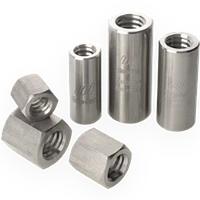
Grade F55 (UNS S32760 / 1.4501) Super Duplex Stainless Steel Specification
F55 Super Duplex | X2CrNiMoCuWN25-7-4 | UNS S32760
Grade F55 Super Duplex Stainless Steel, also known as UNS S32760 and EN 1.4501, is a highly alloyed super duplex stainless steel with a mixed austenitic-ferritic microstructure. It combines high mechanical strength and good ductility with outstanding resistance to pitting, crevice corrosion and stress corrosion cracking. The alloy contains chromium, nickel, molybdenum, copper, nitrogen and tungsten, and is supplied with a minimum pitting resistance equivalent number (PREN) of 40.
Applications
- Pumps, valves and chokes
- Oil and gas production equipment
- Pipework, flanges and manifolds
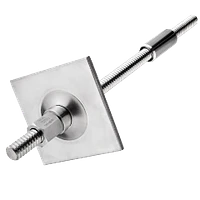
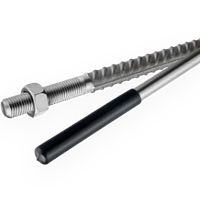
- High-strength bolting and connectors
- Marine and offshore equipment
- Chemical processing equipment
- Defence applications
- Components exposed to chloride-bearing and seawater environments
F55 Related Specifications and Trade Names
- ASTM A182 Grade F55
- UNS: S32760
- EURONORM: 1.4501
- EN designation: X2CrNiMoCuWN25-7-4
- Commercial grade: F55 Super Duplex
- Super Duplex 25% Chromium
- NACE MR0175 / ISO 15156, where the specified product and condition comply
- NORSOK material data sheets D51-D55, D57 and D58, as applicable
Corrosion Resistance
- Minimum PREN of 40 provides high resistance to pitting corrosion.
- Outstanding resistance to marine environments and a wide range of oil and gas production environments.
- High resistance to crevice corrosion.
- High resistance to chloride stress corrosion cracking.
- May be considered for demanding duties where 300-series stainless steels or standard 22% chromium duplex grades do not provide sufficient performance.
Temperature Considerations
- Good ambient and sub-zero notch ductility down to approximately -50°C.
- As with other duplex stainless steels, prolonged exposure to elevated temperatures should be assessed carefully because undesirable intermetallic phases may form.
- Service-temperature limits should be confirmed against the applicable product standard, design code and operating environment.
Welding Characteristics
F55 can be welded using appropriate super duplex procedures and consumables. Important considerations include:
- Maintaining a suitable ferrite-austenite phase balance.
- Controlling heat input and interpass temperature.
- Using compatible super duplex filler materials where required.
- Avoiding contamination and excessive time within critical temperature ranges.
Welding procedures should be qualified to the applicable fabrication standard and service requirements.
Machinability
- F55 has higher strength and work-hardening characteristics than conventional austenitic stainless steels.
- Rigid tooling, sharp cutting edges and positive feeds are recommended.
- Lower cutting speeds and effective cooling and lubrication may be required.
- Machining parameters should be selected for the product form, section size and required finish.
Chemical Composition (%)
| Element | F55 / UNS S32760 |
|---|---|
| Carbon (C) | 0.03 max |
| Manganese (Mn) | 1.00 max |
| Silicon (Si) | 1.00 max |
| Sulphur (S) | 0.015 max |
| Phosphorus (P) | 0.035 max |
| Chromium (Cr) | 24.0-26.0 |
| Nickel (Ni) | 6.0-8.0 |
| Molybdenum (Mo) | 3.0-4.0 |
| Copper (Cu) | 0.50-1.00 |
| Nitrogen (N) | 0.20-0.30 |
| Tungsten (W) | 0.50-1.00 |
| PREN | 40 min |
Mechanical Properties
The values below are minimum or specified range figures for solution-treated EN 10088-3 material up to 160 mm diameter. They are provided as general guidance and should not be used for design without reference to the applicable product standard and certification.
| Property | Value |
|---|---|
| Ultimate tensile strength | 730-930 MPa |
| 0.2% proof strength | 530 MPa min |
| Elongation | 25% min |
| Hardness | 290 HB max |
| Impact energy | 100 J |
Physical Properties
| Property | Typical value |
|---|---|
| Density | 7.8 g/cm³ |
| Specific heat capacity at 20°C | 500 J/kg·K |
| Thermal conductivity at 20°C | 15 W/m·K |
| Electrical resistivity at 20°C | 0.80 Ω·mm²/m |
| Modulus of elasticity at 20°C | 200 GPa |
| Coefficient of thermal expansion, 20-100°C | 13.0 × 10⁻⁶/K |
| Magnetic properties | Magnetic |
Benefits of F55 Super Duplex Stainless Steel
- High proof and tensile strength
- Minimum PREN of 40
- Outstanding pitting and crevice-corrosion resistance
- High resistance to stress corrosion cracking
- Good ductility at ambient and sub-zero temperatures
- Suitable for severe marine, offshore, chemical and oil and gas environments
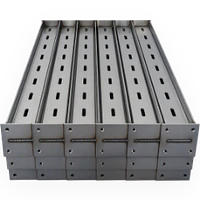
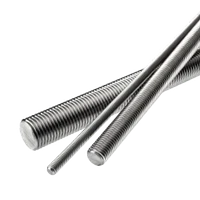
- Available in product forms including bar, forgings, sheet, plate, pipe, tube, flanges and welding consumables
Important: Material selection must consider the complete service environment, fabrication route, product standard and any project-specific approval requirements.