
-
Windposts
Stainless UK Windposts comply with UKCA marking requirements of BS EN 1090-1. They are designed to BS EN 1993 (Eurocode 3) and have external certification of our factory production control by an approved organization.

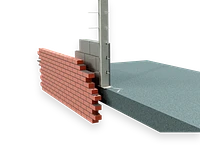
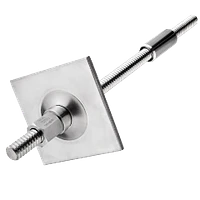
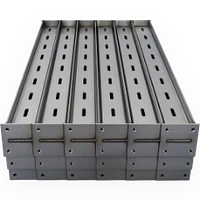
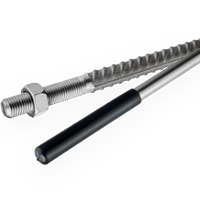
Stainless UK Windposts comply with UKCA marking requirements of BS EN 1090-1. They are designed to BS EN 1993 (Eurocode 3) and have external certification of our factory production control by an approved organization.
ST-UK Windposts are designed as simply supported beams. The maximum allowed deflection for our windposts is span/360. The following tables display standard loadings for different section sizes and heights. Design loads in the tables should be carefully reviewed by the engineer and compared against factored loadings. Windposts must be fully restrained at all times, and ties should be installed at 225 mm vertical centers.
While we provide a wide range of standard sizes, windposts can also be customized using our inhouse design suite, which includes the ability to design as a propped cantilever where required.
SWP-L
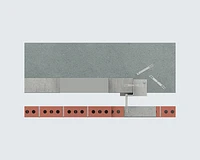
Stainless UK SWP-L windposts designed for small cavities or areas with high wind loads. These posts are made of an angle section, with one leg built into the blockwork and tied to the blockwork to prevent movement and cracking of finishes. The design of Stainless UK SWP-L windposts assumes that the longer leg of the post is fully restrained within the vertical masonry joint. If a vertical movement joint is required, ties with a debonding sleeve on one side can be supplied, but this will reduce the post’s capacity.
SWP-C
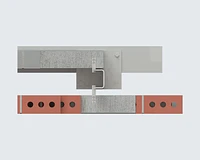
Stainless UK SWP-C windposts are channel section windposts that are specifically designed to be installed within the cavity, without disturbing the blockwork. The windposts come with end connections and ties that clip onto the edges of the channel in the flanges of the channel section, making for easy and convenient installation.
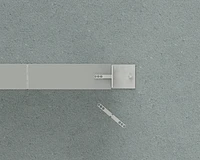
SWP-SP
SWP-SP type windposts are spine posts which are generally used within blockwork, usually an internal single skin wall where the windpost can’t protrude either side of the blockwork. Usually the post will be 20mm smaller than the width of the block, limiting its size, however as per our loading table different thicknesses can be used.
Windpost Design Considerations
Ensure a thorough structural analysis is conducted to identify the loads and forces impacting the windposts, considering wind loads, dead loads, and any other relevant loads or movements. While we provide a wide range of standard sizes, windposts can also be customized using our in-house design suite.
Windload and height of windpost play a large part in deciding which windpost to use, coupled with the structure and the correct fixings.
Slots within the post provide site tolerance and adjustment. It is the responsibility of site to double check opening heights (distance between structure) and slot positions (blockwork and brickwork setting out).
As standard ST-UK will design fixings into concrete structure to suit a concrete strength of C30/37. If this differs to the project requirement, the project structural engineer advise otherwise.
As windposts are restrained by and fixed within the brick/block wall, wall ties (OWT / TWT) should be installed vertically at 225mm centres.
Windposts Construction Products datasheet
(PDF, 3.01 MB)