
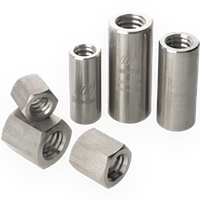
Grade 303 (UNS S30300 / 1.4305) Stainless Steel Specification
303 Stainless Steel | X8CrNiS18-9 | UNS S30300
Grade 303 stainless steel, also known as UNS S30300 and EN 1.4305, is a free-machining austenitic stainless steel. Its controlled sulphur addition improves chip breaking and machining performance, making 303 the most readily machinable of the commonly used austenitic stainless grades. The sulphur addition also reduces corrosion resistance and toughness compared with Grade 304, so 303 is best suited to precision-machined components used in mild environments.
Applications
- Nuts, bolts and screws
- Machined fasteners and fittings
- Shafts, pins and spindles
- Gears and bushes
- Valve and pump components
- Electrical and electronic hardware
- Aircraft fittings
- Precision-turned parts produced on automatic lathes
303 Related Specifications and Trade Names
- EURONORM: 1.4305
- EN designation: X8CrNiS18-9
- ASTM/ASME: UNS S30300
- BS: 303S31
- Former British designation: EN 58M
- Grade 303
- Alloy 303
- Type 303
- AISI 303
Corrosion Resistance
- Corrosion resistance is generally good in mild atmospheric and industrial environments.
- Corrosion resistance is lower than Grade 304 because sulphur-bearing inclusions can initiate pitting.
- Grade 303 is susceptible to pitting and crevice corrosion in chloride-bearing environments, particularly at elevated temperatures.
- Grade 303 is not generally recommended for marine exposure.
- Material selection should consider the complete service environment and required surface condition.
Heat Resistance
- Good oxidation resistance in intermittent service up to approximately 760°C.
- Good oxidation resistance in continuous service up to approximately 870°C.
- Continuous service within approximately 425-860°C is not recommended where subsequent aqueous corrosion resistance is important because carbide precipitation may occur.
- Elevated-temperature use should be confirmed against the applicable product standard and operating conditions.
Welding Characteristics
Grade 303 is not generally selected for welded fabrication because its sulphur addition increases the risk of weld hot cracking and can adversely affect weld quality. Where welding is unavoidable:
- Use a qualified welding procedure appropriate to the product form and joint design.
- Select suitable filler material and control heat input carefully.
- Assess the required corrosion resistance and mechanical performance of the completed joint.
For welded fabrications, Grade 304 or 304L is normally preferred where its machining characteristics are acceptable.
Machinability
- Grade 303 offers excellent machinability and is widely used for high-volume turned components.
- Sharp cutting tools and a rigid machine setup are recommended.
- Cuts should be sufficiently deep to avoid work hardening at the surface.
- Chip breakers and an effective cutting fluid help control swarf and remove heat from the cutting edge.
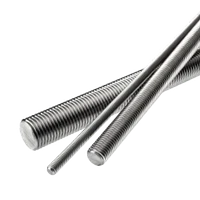
- The grade is commonly supplied as round, hexagonal and other bar forms for machining.
Chemical Composition (%)
Mechanical Properties
The values below apply as general guidance to solution-treated bar products up to 160 mm diameter or thickness. They should not be used for design without reference to the applicable product standard and material certification.
Physical Properties
Benefits of Grade 303 Stainless Steel
- Excellent machinability
- Good chip-breaking characteristics
- Suitable for high-volume precision turning
- Good strength and toughness in mild environments
- Available in common machining-bar forms
- Useful for complex components requiring extensive machining
Important: Grade 303 has lower corrosion resistance than Grade 304 and is not normally recommended for marine or strongly chloride-bearing environments. Product form, condition, certification and project-specific requirements must be confirmed before use.